A little while ago, I wrote a small script by hand. Nothing important. It was the kind of thing I’d normally hand to an agent without thinking twice. I got it wrong, read the error, fixed it, and got it wrong again. And somewhere in there, I noticed I was having a really good time.
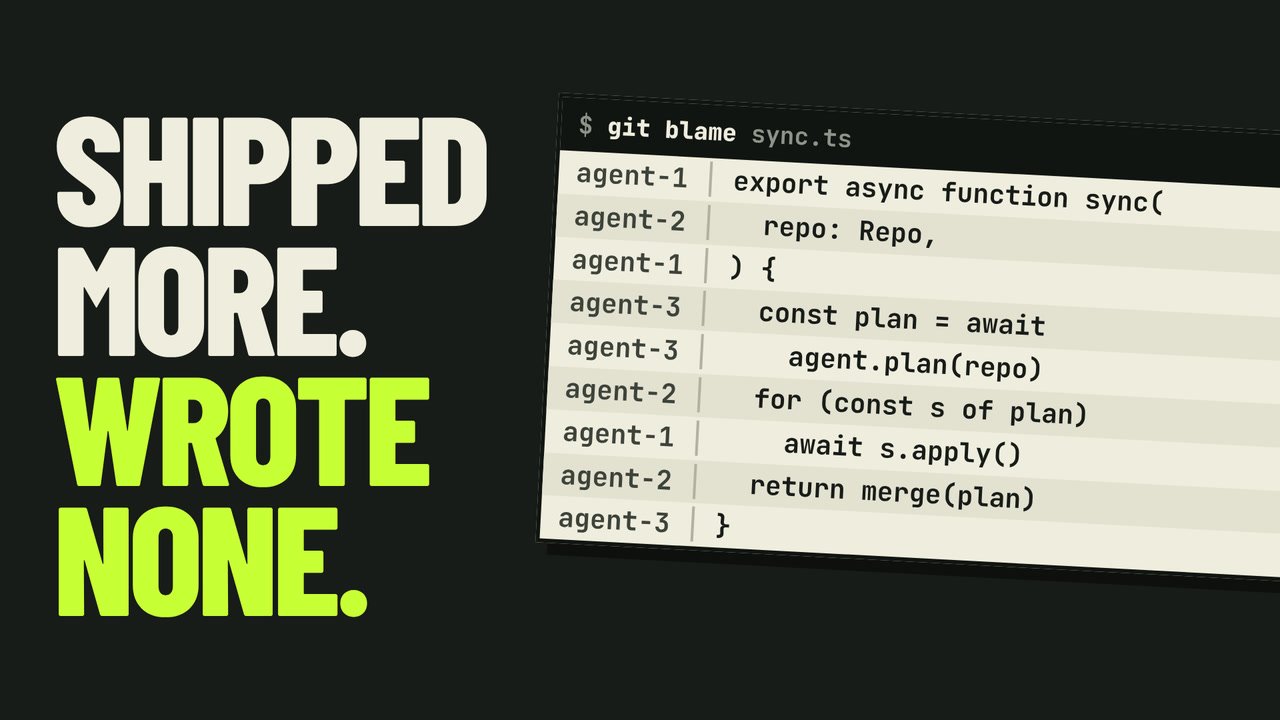
Right after that, I noticed something else. I couldn’t remember the last time work had felt like that. Not because I’ve been doing less. I don’t think I’ve ever shipped more. It’s just that almost none of it goes through my hands anymore.
Prompt, wait, review, decide
That’s what a day looks like now. The agents write. I prompt, I wait, I review, and I decide. Then I do it again, all day. That’s still a job, and on paper it’s probably a better one. I wouldn’t give the agents back. But something still felt off, and for a while my theory was simple: they took the part I liked and left me the part I didn’t.
So I went back to that little script and asked myself what I had actually enjoyed. It wasn’t the typing. Nobody misses semicolons. It was the figuring out: not knowing how something works, poking at it, being wrong, and then that small click when it finally makes sense.
The part before the loop
And then I noticed what my picture of the job was missing. The loop is only the part where the code gets produced. There’s a whole part that happens before it even starts, and I had been treating it like setup.
It’s the research: pulling in data from the observability tools, from the history, from Slack, from all the places where the real context lives. That used to be slow, painful work, and now everything is connected. And it’s the plan: coming up with the idea, validating it, confirming the details, and going around again. I can build a throwaway tool just to test an assumption, or put a mockup in front of the team before a single line of real code exists.
None of this is new. It was always part of the job. But it used to sit under the surface, because the coding took so long that the coding was what everybody saw. Now the code comes fast, and what’s left in plain sight is the thinking. The figuring out didn’t go away. It moved to the front, and it got a lot more room.
So my theory was only half right. The agents didn’t take the fun part. I walked right past it, because I was busy feeding the loop.
Three things I’m trying
- Start before the loop, not inside it. I used to throw a vague problem at an agent and review whatever came back. Now the agents help me research first, I sketch the approach, and then I hand over the building. The review gets easier, because I already know what I’m looking for.
- Keep one problem for myself. Every week, one thing I’m actually curious about, worked out the slow way, with the editor open and the agents closed.
- Ask “would I miss this?” The question used to be whether an agent can do it, and the answer is almost always yes. Boilerplate, config, glue code: take it, all of it. A bug I can’t explain yet, or a design I haven’t made up my mind about: those I want to keep for a while.
I’m not against agents. I use them every day, and I’m not going back to writing everything by hand. I just want to choose what I keep.
This one follows two earlier pieces: Don’t Automate the Fun, where that line comes from, and AI Software Factories Are Optimizing the Wrong Thing, on what the same shift does to a team.
Don’t automate the fun. But first, find out where the fun actually is. What part of the job do you miss?